
Is There a Downside to Affiliate Marketing? An Honest Look
Yes, affiliate marketing has real downsides.
It can eat into your margins, and it puts part of your brand in the hands of people you have never met. It can also under-count the sales your best partners bring in, which quietly pushes them toward programs that pay them more fairly.
None of that makes affiliate marketing a bad channel for a store to run. It does mean the people who do well with it tend to start with a clear view of the trade-offs, rather than discovering them a few months in.
This guide is written mainly for store owners weighing up whether to run an affiliate program. If you are thinking about becoming an affiliate yourself, the drawbacks look a little different, so there is a short section on that lower down.
One thing to get out of the way first: Coupon Affiliates is our own affiliate plugin for WooCommerce, so we are not a neutral voice on whether affiliate programs are worth running. That is exactly why this article spends its time on the downsides, including the ones no plugin, ours included, can solve for you.
The short version
If you are skimming, here are the five downsides that matter most for a store, and what to do about each one.
| Downside | Why it stings | How to keep it in check |
|---|---|---|
| Paying for sales you might have won anyway | Commission and discount codes come out of your margin, and deal sites can grab credit at the last second | Set rates below your margin, and decide which partner types you allow |
| Less control over your brand | Affiliates promote you in their own words, to audiences you do not manage | Approve partners, and put the rules in writing |
| Tracking that misses sales | Link and cookie tracking leaks, so good partners get under-counted | Track with coupon codes as well as links |
| It is not passive or fast | Recruiting, support, payouts and fraud checks are ongoing, and momentum takes months | Automate the repetitive parts, and give it time |
| Fraud and disclosure duties | Self-referrals and undisclosed promotions can become your problem | Vet partners, monitor, and require disclosure in your terms |
1. You pay for sales, and sometimes for sales you would have won anyway

The appeal of affiliate marketing is that you only pay when someone buys.
The catch is that the payment comes out of your margin, and if your margin is already thin, a commission stacked on top of a discount code can leave almost nothing behind. Before you settle on a rate, run the worst case: a partner’s commission plus whatever coupon the customer used, on your lowest-margin product.
There is a sneakier version of this. Say an affiliate posts their code, SPRING15, on a public deal site. A shopper who was already at your checkout opens a new tab, searches for a code, finds SPRING15, and applies it. The affiliate now earns a commission on a sale you were about to make anyway, and you have handed over a discount on top. Coupon and deal sites are built around catching buyers at that final moment, so this is not a rare edge case.
You can keep this in check without banning the channel:
- Set commission below your product margin, and check the numbers on discounted orders, not full-price ones.
- Decide up front whether coupon and deal sites are allowed in your program, and say so in your terms. It helps to know the different types of affiliates you might attract before you set that policy.
- Where you can, give your own paid ads and email the credit for a sale before a coupon applied at the last moment does.
- Watch profitability per partner, not just total sales, so a “top” affiliate who mostly skims existing buyers stands out. Our guide to affiliate marketing KPIs and metrics covers what to track.
- Setup your fraud prevention rules to block suspicious referrers and self referrals.
2. You give up some control over how your brand is promoted

Affiliates talk about your products in their own voice, to audiences you do not manage.
Most are fine. Some will oversell, promise results you cannot back up, bid on your brand name in Google Ads so they intercept people already searching for you, or lean on spammy tactics that rub off on your reputation.
The awkward part is timing: by the time a bad post reaches you, the people who saw it have already formed an impression.
The fix is boring, but it works. Do not auto-approve everyone who applies, so you actually get a look at who is representing you. Set out what is and is not allowed in your program terms and conditions (no bidding on your brand name, no fake claims, disclosure required), and check now and then how your active partners are promoting you. When a partner does step over the line, having the rules written down makes the awkward conversation that follows a lot easier.
3. Link tracking will miss sales, so good partners get under-counted
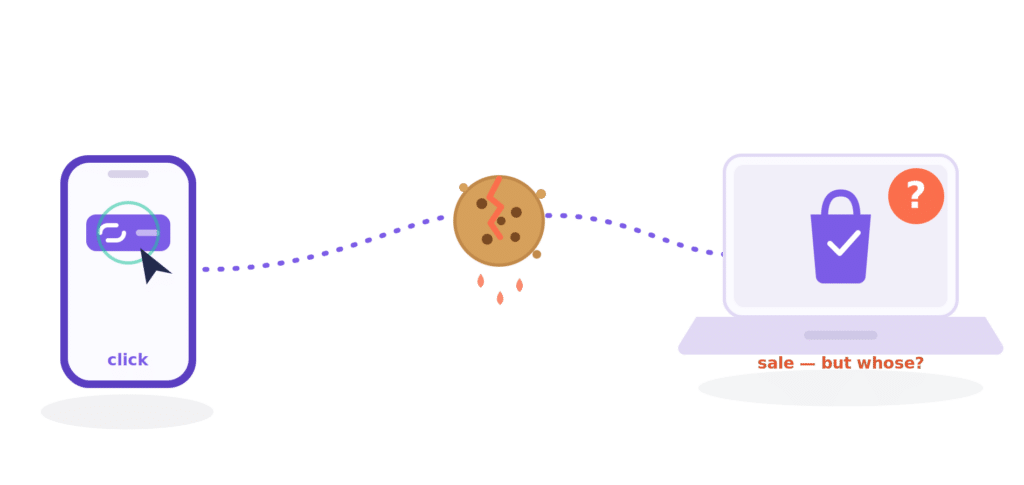
Most affiliate programs credit a partner using a tracking link that drops a cookie. That trail is leakier than it sounds.
You may have read that Google was going to remove third-party cookies from Chrome, but it reversed that plan in 2025 and later wound down its Privacy Sandbox project, so those cookies are still here.
That has not made link tracking reliable, though. Safari and Firefox block third-party cookies by default, plenty of people clear them or browse privately, some strip the tracking parameters out of a link before they click, and a shopper who clicks on their phone often buys later on a laptop. Each of those quietly breaks the connection between the click and the sale.
When that connection breaks, your dashboard shows fewer sales than a partner really drove. They feel short-changed, and the good ones drift to programs where they get paid for their work. You end up losing exactly the affiliates you most wanted to keep.
One way around a lot of this is to track with coupon codes instead of cookies, on their own or alongside links. A code turns up at checkout no matter what browser someone uses or which device they clicked on, so it survives most of what breaks link tracking.
This is the model our own plugin is built on, and it is fair to say it is the main reason we prefer it. It is not flawless either, because codes can leak to public deal sites (see the first downside), which is why most programs run codes and links together rather than betting on one. We go deeper on this in our look at the benefits of a coupon affiliate program.
4. It is not passive income, and it will not pay off overnight

Affiliate marketing gets sold as a channel you switch on and then collect from. For the store owner, that is not how it goes. You are recruiting partners, helping them get started, answering their questions, approving payouts, checking for fraud, and keeping their promo material current. It is a channel you run, not one that runs itself.
It is also slow to build. Most programs take months to gather any real momentum, which is long enough that plenty of owners quit before the channel earns its keep. A lot of the reasons programs stall are avoidable, and we cover them separately in why affiliate programs fail and how to fix it.
Two things help. Automate the repetitive parts (registration, tracking, and working out who is owed what) so the admin does not swallow your week, and go in expecting the first few months to be groundwork rather than profit. Our step-by-step guide to creating a WooCommerce affiliate program walks through the setup side of that. If you are still at the planning stage, our affiliate program checklist covers the essentials to get in place first.
5. Fraud, abuse, and disclosures you are on the hook for

Any program that pays people creates an incentive to game it. The common ones are affiliates buying through their own code to pocket the discount and the commission, orders placed to trigger a payout and then refunded, and codes leaked to public coupon sites so the discount spreads far beyond the audience you meant to reach.
There is a legal side to consider too, and it catches store owners off guard. In the US, anyone promoting your products for a commission has to disclose that clearly, under the FTC’s Endorsement Guides, which were updated in 2023. The part that surprises people is that the brand might be held responsible when an affiliate fails to disclose, and the FTC expects you to tell your partners to disclose and to keep an eye on whether they do. In other words, one partner’s careless post can land on your desk.
Most of this is manageable with a few habits: approve partners before they can earn, watch for the obvious fraud patterns (self-referrals, odd refund spikes), keep control of who can use which code, and spell out disclosure and conduct rules in your program terms so you have something to enforce.
Good affiliate software can flag a lot of the fraud signals for you. We go through the common schemes and how to shut them down in our guide to preventing WooCommerce affiliate coupon abuse and fraud.
Descargo de responsabilidad: This article is for informational purposes only and does not constitute legal advice, nor does it substitute for legal advice. We recommend consulting a qualified legal professional to confirm and discuss any legal information, concerns or questions you have.
What about the downsides for affiliates themselves?
If you are reading this because you are thinking of becoming an affiliate rather than running a program, the drawbacks shift. The income is real, but it is neither guaranteed nor quick, and you can spend months building content before you see much at first.
You also depend on the merchant, who can cut your commission, change the rules, or close the program, so your earnings move with decisions you have no say in. It is a crowded field, which means an audience that trusts you counts for more than the number of links you post. And the same disclosure rules apply to you: promote things that hold up, and be upfront that you earn a commission, or your credibility is the first thing to go.
So, is it worth the downsides?
For most stores with a product people actually want and a bit of patience, yes.
The downsides above are real, but they are the kind you can plan around, and the core deal still holds: you pay when a sale happens, not before. What it is not is free money or a hands-off channel, and anyone who sells it that way is skipping the fine print. Plenty of stores weigh all this and still go ahead, which is part of why so many brands invest in affiliate marketing.
We will say again that we build a plugin in this space, so factor that in. If you are still deciding whether affiliate marketing suits your business at all, our honest take on whether affiliate marketing is worth it walks through when it fits and when it does not.
For the bigger picture of how it all works, start with our complete guide to affiliate marketing for WooCommerce.
Frequently asked questions
Does affiliate marketing reduce your profit margin?
Yes. Commission is paid out of your margin, and it often sits on top of a discount code, so a sale can end up barely profitable. Set your commission rate below your product margin, and check the numbers on discounted orders rather than full-price ones.
Can affiliate marketing damage your brand?
It can, if you accept every applicant and set no rules. Because affiliates promote you in their own words, a few will oversell or use tactics you would not. An approval step, written program terms, and the odd check on how partners promote you keep the risk small.
Is affiliate marketing passive income for a store owner?
No. Running a program means ongoing recruiting, support, payouts, and fraud checks, and it usually takes months to build momentum. Software can automate the repetitive admin, but it is a channel you manage rather than one that runs itself.
Did Google removing third-party cookies break affiliate tracking?
Google did not remove them. It reversed that plan in 2025 and later wound down the Privacy Sandbox, so third-party cookies are still in Chrome. Link tracking is still leaky for other reasons (Safari and Firefox block those cookies, people clear them or switch devices), which is why many programs also track with coupon codes.
What is the biggest downside of affiliate marketing?
For a store, the sneakiest one is paying for sales you would have made anyway, usually when a coupon or deal site catches a buyer at the last moment, or when weak tracking hands credit to the wrong partner. It is not the most dramatic risk, but it is the one that quietly costs you.
Thinking about starting an affiliate program for your WooCommerce store? Afiliados al cupón handles the tracking, payouts, and fraud checks so the downsides stay manageable. Try the free version on WordPress.org, or start a 7-day trial of the Pro version.

Elliot Sowersby es un desarrollador de WordPress de Yorkshire, Reino Unido. Es el fundador y desarrollador principal de Afiliados al cupón y RelyWP.


 English
  Spanish
  German
  French
Deja una respuesta