
The affiliate incentives that work best are paid for by the extra sales they bring in. A higher commission rate once an affiliate passes a sales milestone, a bonus for bringing you new customers, and store credit with a little extra value on top all fit that rule. Your normal commission covers the sales an affiliate would make anyway. The incentive is there to get them to do more, so it should only kick in when they do.
This guide covers ten ways to reward affiliates, what each one costs you, and which affiliates each suits. It ends with the mistakes that turn a reward into a loss.
Jump to what you need:
- Want ideas? 10 affiliate incentives
- Comparing costs? What each reward costs you
- Worried about margins? How to keep rewards profitable
- Ready to set them up? Automating rewards in WooCommerce
A quick disclosure: we make Coupon Affiliates, a WooCommerce affiliate plugin, and the setup notes below refer to it. The incentive ideas work with any affiliate software.
Affiliate Rewards vs Commission
Commission is the agreed rate you pay on every sale an affiliate refers. An incentive, or reward, is anything you give on top of that, usually for hitting a goal. A program can run on commission alone. Incentives give affiliates a reason to keep promoting after the first few weeks.
Incentives work best on the affiliates who already make some sales. In most programs a small group of affiliates brings in most of the revenue (the 80/20 rule), so a reward that gets your best sellers to sell a little more usually does more than one aimed at people who have never made a sale.
How to Keep Affiliate Rewards Profitable
Before picking rewards, set a few rules so they can’t eat your margin:
- Pay for results, not sign-ups. Tie each reward to sales, orders or new customers. A reward for joining or for clicks invites fake accounts.
- Set the bar above normal. If an affiliate already sells $1,000 a month, a bonus at $800 pays them for nothing. Look at their last few months first.
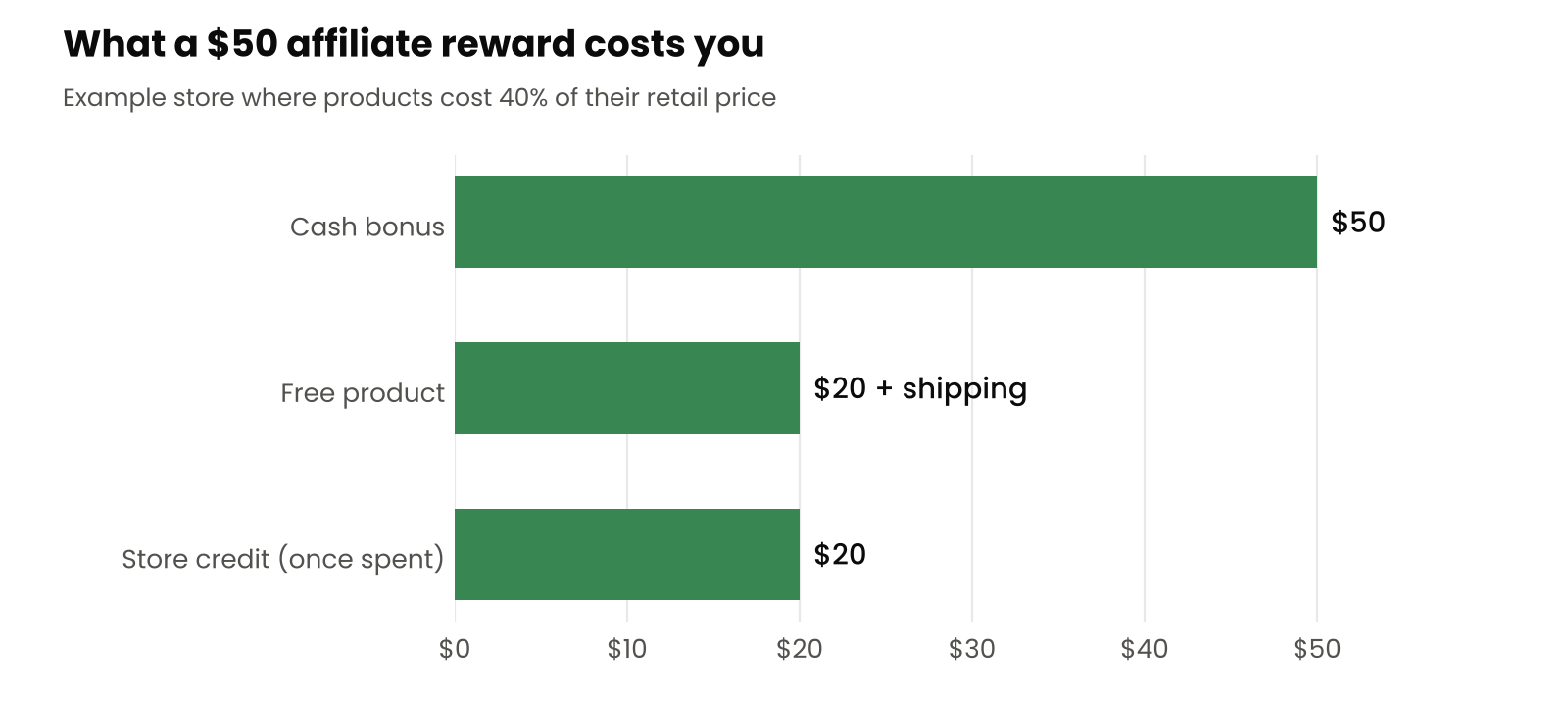
- Count rewards at what they cost you. A $50 product costs you its wholesale price plus shipping, not $50. Store credit works the same way.
- Wait for the refund window. Only count orders once they can no longer be refunded. Our guide to commission refunds and clawbacks covers how.
- Put an end date on extras. A limited-time bonus can end quietly. A permanent rate rise is hard to take back.
It helps to set a yearly budget for rewards as a share of affiliate sales, alongside commission. Our breakdown of what an affiliate program costs shows where rewards fit with the other costs.
10 Affiliate Incentives That Work
1. A higher commission rate after a milestone
Raise an affiliate’s rate once they pass a sales target. For example, move them from 10% to 12% after $5,000 in referred sales. You only pay more on sales that come after the milestone, and the affiliate has a reason to keep going.
Keep the jump small enough that it still fits your margin, and don’t add too many steps. Two or three levels are easy to explain in one sentence. More than that gets hard to follow.
Best for: affiliates who already sell steadily and could sell more.
What it costs you: the extra percentage on future sales only. Moving from 10% to 12% costs $20 more on each $1,000 they sell after the milestone.
In Coupon Affiliates: a performance bonus with the New Commission Rates or Commission Boost reward. You can also move affiliates into a higher group with its own rates, as our affiliate groups guide shows.
2. A one-off cash bonus at a target
A flat bonus, such as $50 when an affiliate reaches 25 sales in a month, is simple to understand and easy to announce. A monthly target gives affiliates a fresh reason to push every month, which an all-time target doesn’t.
Best for: a monthly push, or the run-up to a busy season.
What it costs you: the bonus itself. Size it as a share of the sales it takes to earn it. A $50 bonus for $2,500 in extra sales adds 2% to the cost of those sales.
In Coupon Affiliates: a performance bonus with the Bonus Commission reward, which adds the amount to the affiliate’s unpaid commission. Set the frequency to once per month so it can be earned again.
3. A bonus for bringing in new customers
Not every referred sale is worth the same to you. A first order from someone who has never bought before is worth more than a repeat order from an existing customer. Paying more for new customers points your affiliates at the sales you value most.
Best for: stores that want growth rather than repeat orders, and programs where coupon codes leak to existing customers.
What it costs you: extra commission on first orders only.
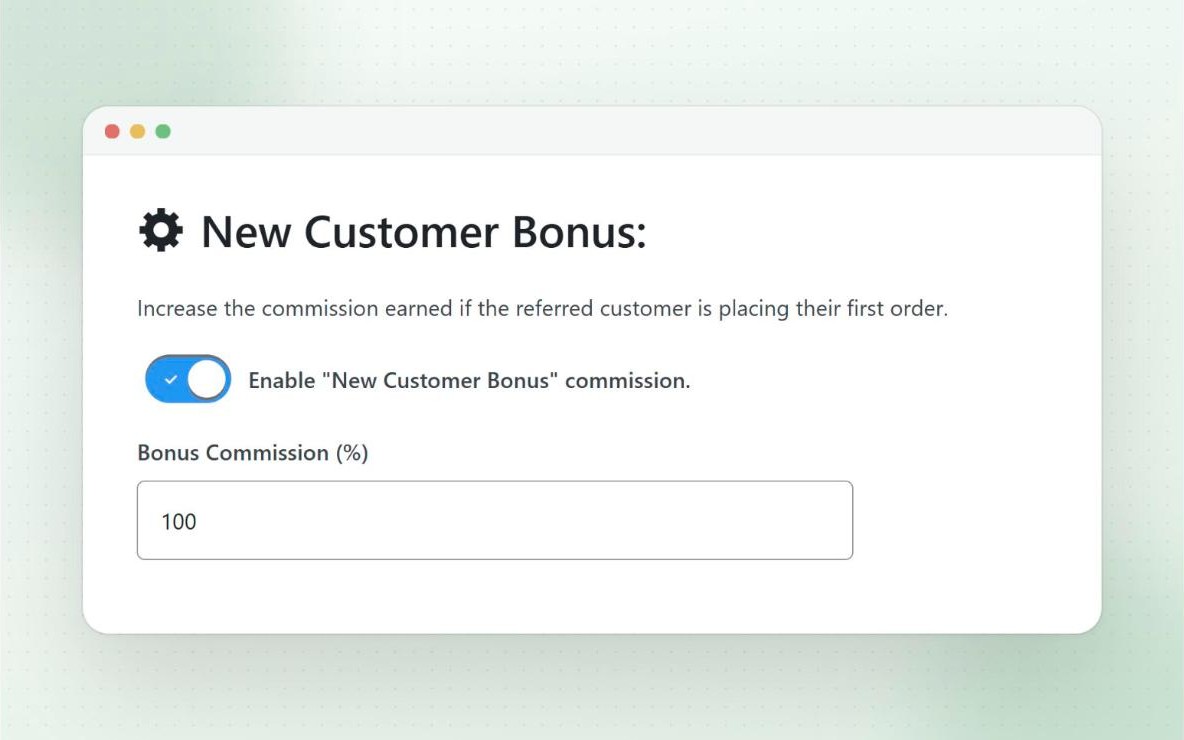
In Coupon Affiliates: the New Customer Bonus setting (PRO). Set it to 100% and a 10% rate becomes 20% on a referred customer’s first order.
4. Store credit with extra value
Offer affiliates the choice of being paid in store credit, and add a bonus for choosing it, such as $12.50 in credit instead of $10 in cash. Affiliates who already buy from you get more value. You pay for the goods at cost rather than handing over cash.
Best for: affiliates who are also customers, such as loyal shoppers and small creators.
What it costs you: the cost of the goods when the credit is spent. In our store credit payouts guide, $12.50 of credit costs about $5 when products cost you 40% of their retail price.
In Coupon Affiliates: store credit payouts (PRO), or the Store Credit reward on a performance bonus.
5. Free products
Sending an affiliate a product they haven’t tried yet is a reward and a sales tool at the same time. They get something they want, and they can show it in photos, videos and reviews, which helps them sell it.
Best for: creators and reviewers, and new product launches.
What it costs you: the wholesale cost of the product plus shipping, not its retail price.
In Coupon Affiliates: the Free Product Order reward, which creates a free order for a chosen product and quantity.
6. A gift coupon for their own orders
A personal discount code for the affiliate’s own shopping, such as 30% off their next order, costs less than a free product and still feels generous. Make it single-use and give it an expiry date so it doesn’t pile up.
Best for: affiliates who shop with you regularly.
What it costs you: the discount on one order, and only if they use it.
In Coupon Affiliates: the Gift Coupon reward, which makes the code from a template coupon you set up.
7. A bigger discount for their audience
Some affiliates would rather have a better offer to share than more money for themselves. Raising the discount on their code from 10% to 15% makes their posts easier to act on and helps them sell more.
Best for: creators whose followers respond to deals.
What it costs you: the extra discount on every order that uses the code, so set it with your commission rate in mind. Our post on coupon affiliate marketing shows how the two add up.
In Coupon Affiliates: the Bigger Customer Discount reward on a performance bonus.
8. A welcome bonus for new affiliates
The hardest sale for a new affiliate is the first one. A small welcome bonus can get them started, but paying cash just for joining invites fake sign-ups. Two safer versions: a bonus that pays out on their first sale, or a welcome gift coupon they can only use on their own order.
Best for: programs where new affiliates sign up and never share their code.
What it costs you: small, as long as it needs a sale or a purchase to be worth anything.
In Coupon Affiliates: a performance bonus with the Welcome Bonus trigger. Approving applications by hand helps keep fake accounts out.
9. Contests and leaderboard prizes
Run a contest for a set period, such as the most sales during Black Friday week, with a prize for the top few affiliates. Pair it with a personal target that everyone can reach, so smaller affiliates don’t give up. Our guide to gamifying your affiliate program covers leaderboards, levels and contest emails in detail.
Best for: busy sales periods and programs with a group of active affiliates.
What it costs you: the prizes only, and the period is fixed so the cost is known in advance.
In Coupon Affiliates: affiliate leaderboards (PRO), plus a performance bonus with an expiry date for the personal targets.
10. Non-cash perks
Not every reward needs to cost money. Perks that top affiliates often value:
- Early access to new products or sales, so they can post first
- Exclusive banners and creatives for your top group (our creatives guide covers what to make)
- A regular call with you or your affiliate manager to plan promotions
- A feature on your blog, email list or social accounts
- Faster payouts or more payout methods for higher levels
Best for: your best affiliates, who want recognition and help as well as money.
What it costs you: mostly your time.
In Coupon Affiliates: move top affiliates into a group with its own creatives, payout methods and dashboard tabs, using the Role or Group Change reward.
What Each Reward Costs You at a Glance
| Incentive | What it costs you | Best for |
|---|---|---|
| Higher rate after a milestone | The extra % on later sales | Steady sellers |
| Cash bonus at a target | The bonus amount | Monthly pushes |
| New customer bonus | Extra commission on first orders | Growth-focused stores |
| Store credit with extra value | Cost of the goods when spent | Affiliates who shop with you |
| Free products | Wholesale cost plus shipping | Creators and reviewers |
| Gift coupon | One discount, if used | Regular shoppers |
| Bigger customer discount | Extra discount on every order | Deal-driven audiences |
| Welcome bonus | Small, tied to a sale | Getting first sales |
| Contests | The prizes | Busy seasons |
| Non-cash perks | Mostly your time | Top affiliates |
The face value of a reward and what it costs you are often different. A $50 cash bonus costs $50. A $50 product or $50 of store credit costs you what the goods cost you, plus shipping for the product.
How to Automate Affiliate Rewards in WooCommerce
Handing out rewards by hand works for a few affiliates. Past that, it’s easy to forget who hit a target or pay someone twice. In Coupon Affiliates, the Performance Bonuses module (PRO) checks each affiliate’s progress and gives the reward when they reach the goal.
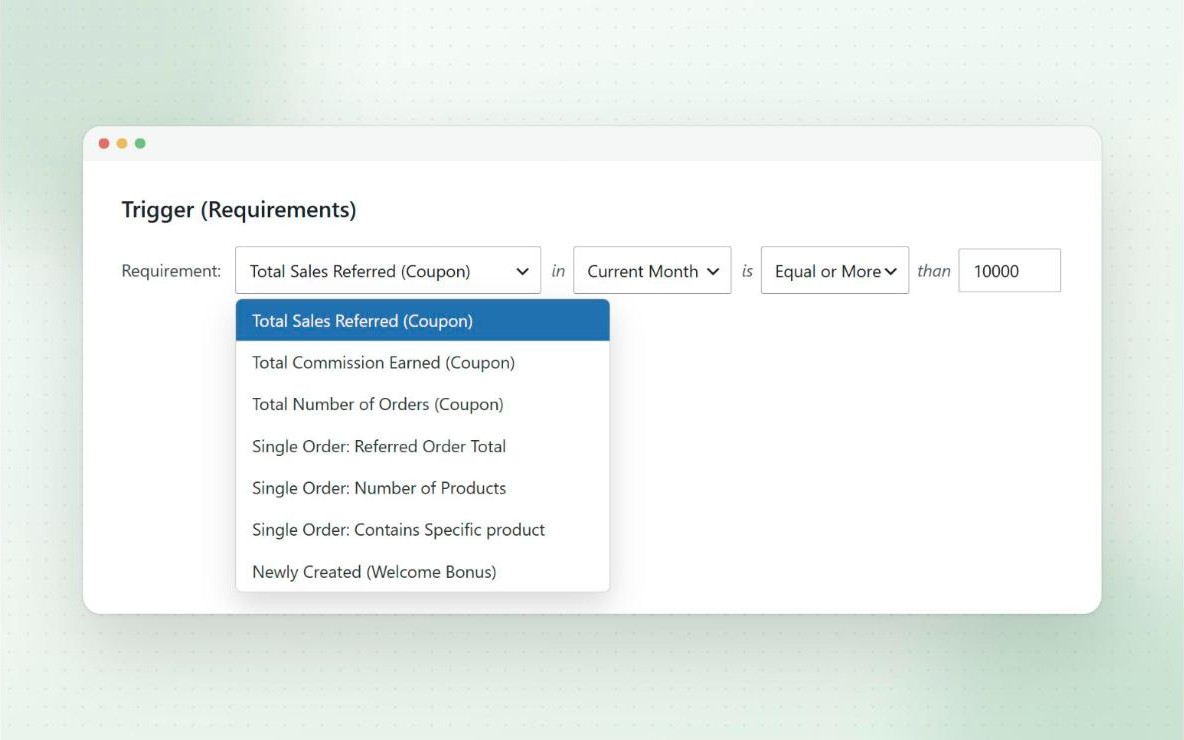
Each bonus has a trigger and one or more rewards. Triggers include:
- Total commission, sales or orders, all-time or for the current week, month or year
- A single order over a set amount, or with a certain number of products
- An order that includes a specific product
- A welcome bonus when an affiliate joins
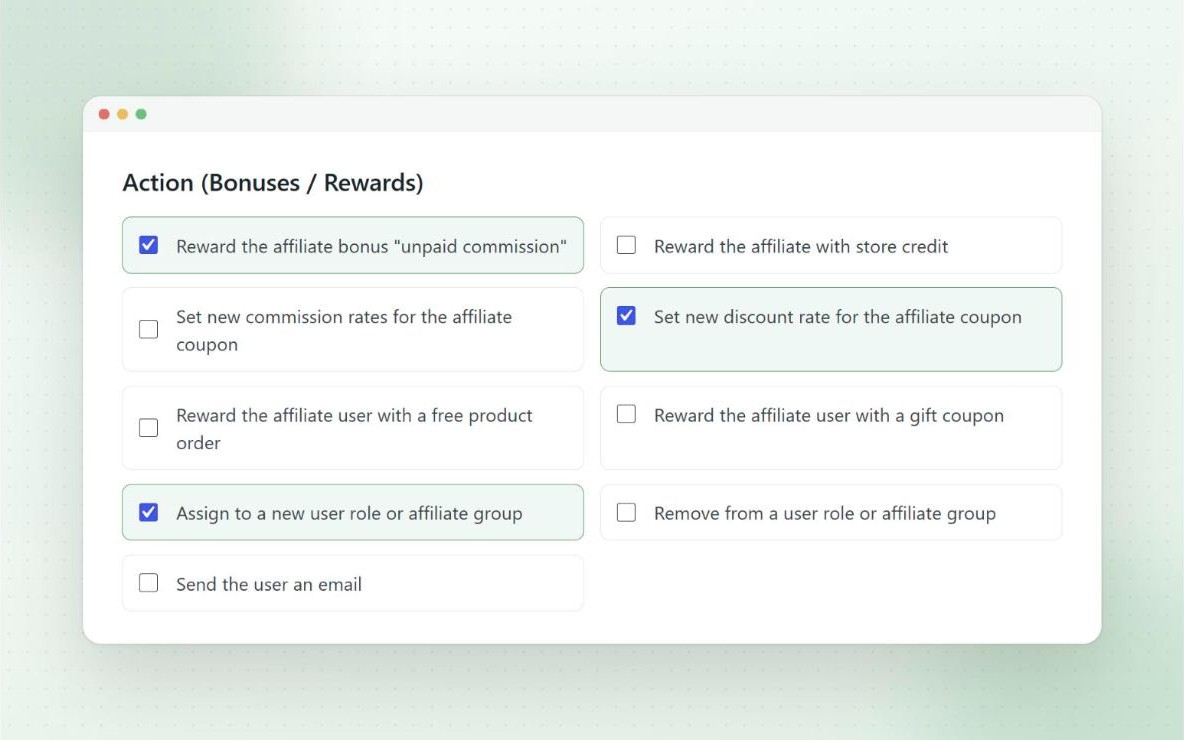
Rewards include bonus commission, store credit, a commission boost, new commission rates, a bigger discount for their customers, a free product order, a gift coupon, a move to a new role or group, and a custom email. You can combine several on one bonus, limit it to certain groups, and set it to repeat or expire.
Affiliates see every bonus on the Bonuses tab of their dashboard, with a progress bar and a countdown if the bonus has an end date. Affiliates can only work toward a bonus they can see, so check that each one shows for the right group.
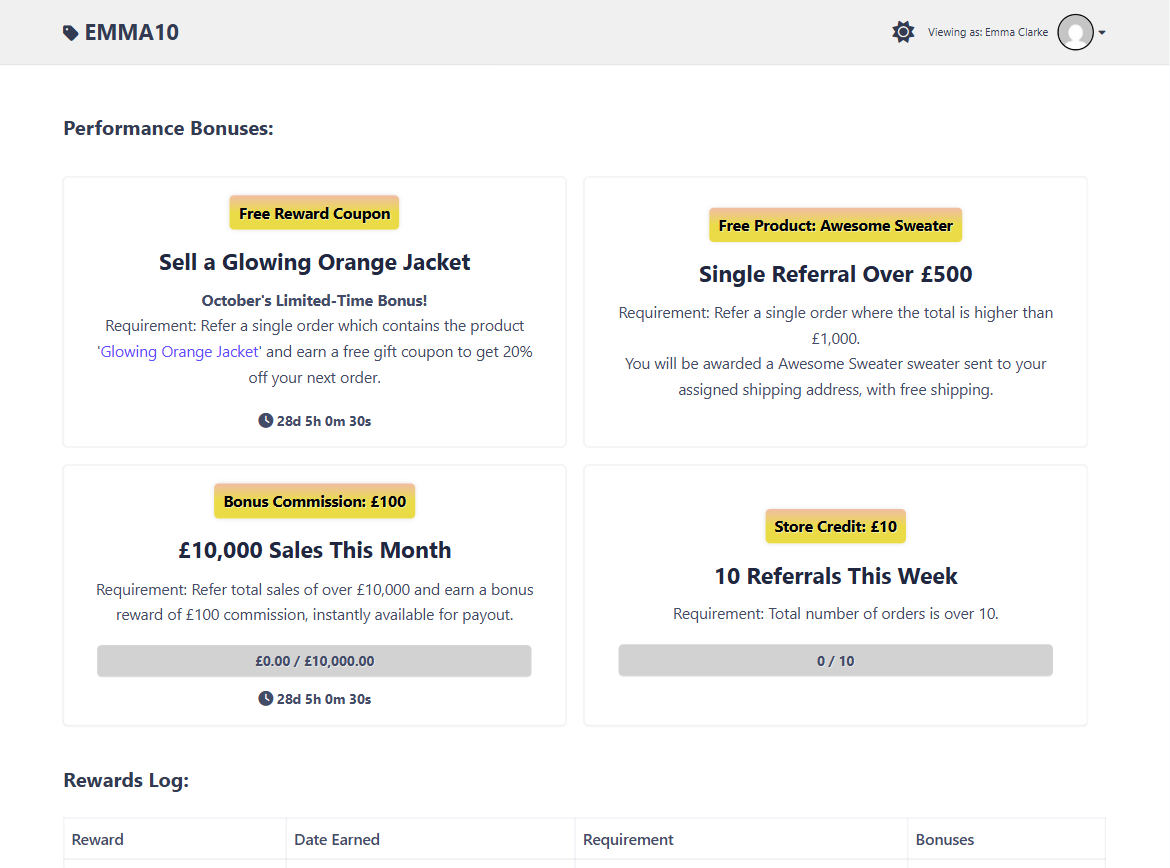
The full list of options is on the performance bonuses feature page, and the setup guide walks through creating your first bonus.
Mistakes to Avoid
- Rewarding activity instead of sales. Bonuses for clicks or sign-ups get you clicks and sign-ups.
- Targets nobody can reach. If only your top affiliate can hit the goal, the rest have nothing to aim for.
- Paying on refunded orders. Hold rewards until the refund window has closed.
- Discounts that leak. A bigger discount on a code that ends up on coupon sites costs you on every order. See our guide to preventing coupon abuse.
- Too many tiers and rules. Keep the rules short enough to explain in two sentences.
- Never telling anyone. Announce new rewards and remind affiliates who are close to a goal. An affiliate newsletter is a simple way to do it.
FAQ
What are affiliate incentives?
Affiliate incentives are rewards you give affiliates on top of their normal commission, usually for reaching a goal. Common examples are a higher commission rate after a sales milestone, cash bonuses, store credit, free products and contests.
How do you reward affiliates without losing money?
Tie every reward to sales above what the affiliate normally makes, count each reward at what it costs you rather than its face value, and only count orders once the refund window has passed. Limited-time bonuses are also easier to control than permanent rate rises.
Are cash bonuses or store credit better?
Cash suits affiliates who don’t buy from you, such as bloggers and review sites. Store credit suits affiliates who are also customers, and it costs you less because you pay for the goods at cost. Offering both, with a little extra for choosing credit, lets each affiliate pick.
How much should I spend on affiliate rewards?
There’s no standard figure. Start with a small budget as a share of affiliate sales, check which rewards lead to extra sales, and drop the ones that don’t. Our guide to setting commission rates helps you work out how much room your margins leave.
Do affiliate rewards work for small programs?
Yes, and they’re easier to run when you know each affiliate. With a handful of affiliates, a personal thank-you, a free product or a quick call can do as much as a formal bonus scheme.
Our Take
We make an affiliate plugin with bonuses built in, so weigh our view with that in mind. We’d start with the simple ones: one clear milestone with a higher rate, a bonus for new customers, and store credit for affiliates who shop with you. Add contests for busy seasons, and spend your time on the affiliates who already sell.
To set these up in WooCommerce, start with the free version of Coupon Affiliates, or try PRO free for 7 days to use performance bonuses. For more ways to keep affiliates active, read our guide to building affiliate relationships.

Bill Ricardi is a former Silicon Valley sysadmin, and uTest’s 2010 Performance Tester of the Year. He was test manager for Deloitte before becoming a full time author in 2017, and is also a regular contributor to the Coupon Affiliates blog.

Leave a Reply