
How to Create an Affiliate Program in WooCommerce (Step by Step)
The short answer: install an affiliate plugin, run its setup wizard to create an affiliate dashboard and signup page, set your commission, then test one referral end to end before you invite anyone. With Coupon Affiliates, the basic setup takes about an hour, and each affiliate gets their own coupon code and referral link.
This is a practical walkthrough for store owners. It uses our plugin, Coupon Affiliates, because that’s the one we know inside out. If you haven’t picked a plugin yet, our comparison of the best WooCommerce affiliate plugins covers ten options, and our guide to WooCommerce affiliate marketing explains how affiliate programs work if you’re new to them.
Disclosure: we make Coupon Affiliates. Most steps work in the free version; the ones that need PRO are marked.
In this guide
- Before you start
- Step 1: Install the plugin
- Step 2: Run the setup wizard
- Step 3: Decide how affiliates join
- Step 4: Turn on referral links
- Step 5: Fine-tune commission
- Step 6: Set up payouts (PRO)
- Step 7: Check the emails and dashboard
- Step 8: Test it before you launch
- Step 9: Launch and recruit
- FAQ
Before you start
Settle three things first, because the setup wizard asks about them:
- Your commission rate. Work it out from your margin. Our commission rate guide and commission calculator help.
- The discount affiliates can offer. Every affiliate’s coupon starts as a copy of one “template coupon”, so decide on the discount, usage limits and any product exclusions now.
- Your rules. Have your affiliate terms ready, so you can link to them from the signup form.
Also make sure coupons are switched on in WooCommerce (WooCommerce > Settings > General > “Enable the use of coupon codes”). The plugin usually does this for you, but it’s worth checking.
Step 1: Install the plugin
For the free version, go to Plugins > Add New in your WordPress dashboard, search for “Coupon Affiliates”, then install and activate it. You can also download it from WordPress.org.
If you’re using PRO, download it from the link in your welcome email after you sign up on the pricing page, then upload the zip file under Plugins > Add New > Upload Plugin.
Step 2: Run the setup wizard
The setup wizard opens when you first activate the plugin. It has six short steps:
- Dashboard. Click “Generate Dashboard Page”, or add the
[couponaffiliates]shortcode to a page and select it. This is where affiliates see their stats, links and commission. - Registration. Switch on the registration features and generate the signup page (or use the
[couponaffiliates-register]shortcode). This is also where you create the template coupon. The “Generate Coupon” button makes a basic one you can edit later. - Commission. Enter your default commission: a percentage of the order, a fixed amount per order, a fixed amount per product, or a mix.
- Taxes. Choose whether tax is included when commission is calculated.
- Emails. Set the name and address emails come from, where admin notifications go, and whether affiliates get an email each time their code is used.
- Finish. You’ll get links to the rest of the settings, your coupons and the template coupon.
You can skip the wizard and use the settings page instead. The setup guide in our docs covers each option.
Step 3: Decide how affiliates join
There are three ways to add an affiliate, and most stores use more than one.
Let them apply. People fill in the form on your signup page, and each application appears under Coupon Affiliates > Registrations. When you accept one, the plugin creates their coupon from your template, assigns it to their account and sends them a welcome email with a link to their dashboard. You can change the coupon code they asked for, or add a message, before you accept. See affiliate registration for the options, and our guide to building a signup page for what to put on it.
Add them yourself. The “Add New Affiliate” button on the Registrations page takes a username, email and coupon code, and creates the user and coupon in one go. It’s handy for influencers you’ve recruited directly (how it works).
Use an existing coupon. Edit any WooCommerce coupon, open its “Coupon Affiliates & Commission” section and pick the affiliate user. Good for partners who already have a code (how to assign users to coupons).
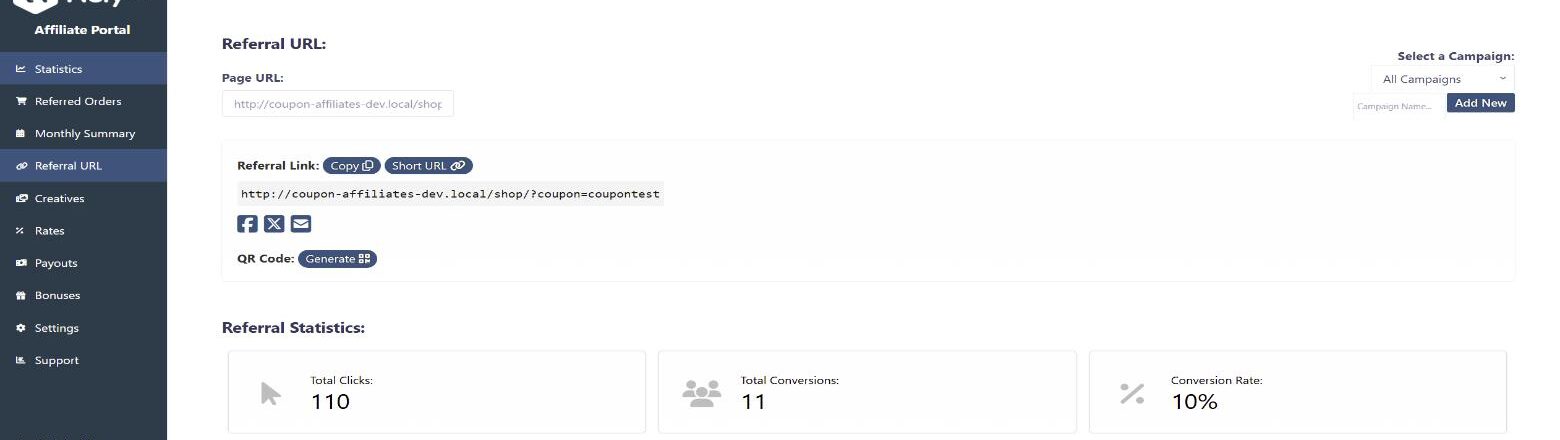
Step 4: Turn on referral links
Coupon tracking works as soon as an affiliate has a code. Referral links are optional but worth having, because each affiliate then also gets a link that applies their coupon automatically.
You’ll find them under Settings > Referral Links. The main things to set are the cookie length (how many days a click counts for), whether the coupon is applied automatically, and the default page links point to. Affiliates can also generate a link to any page on your site from their dashboard. The referral URLs doc covers every option.
Step 5: Fine-tune commission
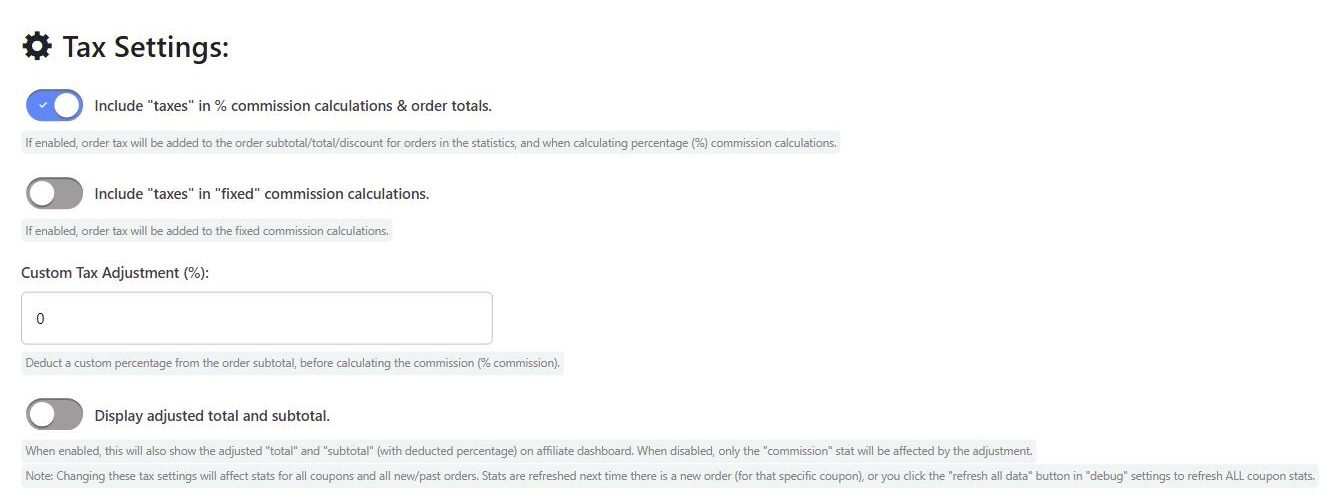
The wizard sets one rate for everyone. On the Commission settings tab you can also decide how tax and shipping are handled, and how commission is rounded.
With PRO, you can set different rates per affiliate coupon, product, category or affiliate group. That’s useful when your margins vary a lot between products, or when you want to pay top affiliates more.
Step 6: Set up payouts (PRO)
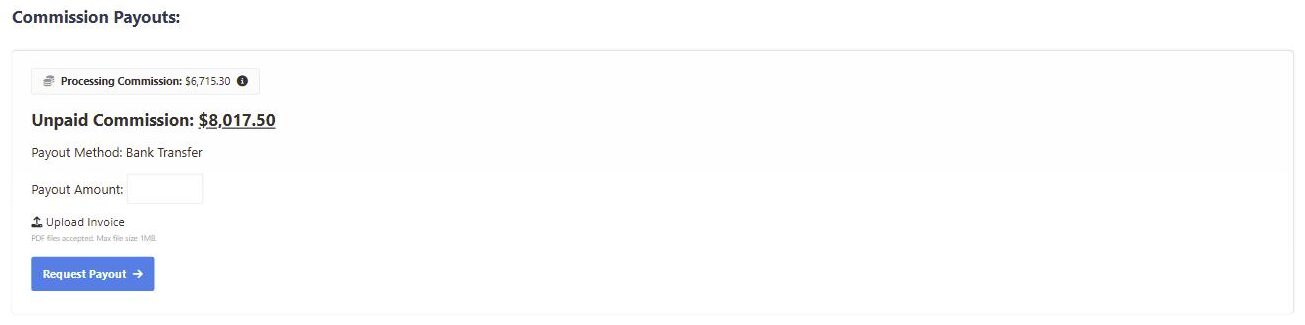
The free version tracks how much commission each affiliate has earned, and you pay them however you like. PRO adds a payout system: commission builds up as “unpaid” when orders complete, affiliates request a payout from their dashboard, and you approve and pay it from the Payouts page.
You choose which payout methods affiliates can pick from:
- PayPal Payouts or Stripe, for one-click payments
- Wise bank transfer
- Store credit they can spend in your shop (see paying affiliates in store credit)
- A manual bank transfer that you mark as paid
Two settings are worth turning on early. A commission delay holds commission back for a set number of days after an order completes, so refunds don’t get paid out. Scheduled payout requests submit requests automatically each month (or week) for affiliates who meet the criteria you set, such as a minimum amount. Our guide to paying affiliates in WooCommerce goes through the options.
Step 7: Check the emails and dashboard
Under Settings > Email Notifications, read the “Affiliate Application Accepted” email that goes out when you accept an affiliate, and edit it to sound like you. It’s the first thing a new affiliate reads, so include their coupon code, their dashboard link and one tip for getting started. The email notifications doc covers each email.
Then decide how the dashboard looks. The standard dashboard sits inside your theme’s page layout. The affiliate portal is an alternative full-screen layout that doesn’t depend on your theme, with your own logo and colors. Both are in the free version.

Step 8: Test it before you launch
This step gets skipped a lot, and it’s where most setup problems show up. Before you invite anyone:
- Apply through your own signup form with a test email address, and accept the application.
- Check the welcome email arrives, and that the dashboard link works.
- In a private browser window, click the test affiliate’s referral link and place an order. Check the coupon was applied without typing it.
- Complete the order in WooCommerce and confirm the commission shows up on the test affiliate’s dashboard.
If the link doesn’t apply the coupon, the usual causes are page caching or a cookie consent banner. Our privacy and cookie settings doc explains the fixes. Delete the test order and affiliate when you’re done.
Step 9: Launch and recruit
Link to your signup page from your site’s footer and your customer emails, then invite your first affiliates. Our guide to recruiting affiliates covers where to find them.
After that, the work is keeping affiliates active. A good onboarding sequence gets new affiliates to their first sale, banners from the creatives feature (PRO) give them something to post, and automating the routine parts keeps the admin manageable.
Frequently asked questions
Can I create an affiliate program in WooCommerce for free?
Yes. The free version of Coupon Affiliates covers coupon and referral link tracking, the signup form, affiliate dashboards and email notifications. You’d pay affiliates yourself, outside the plugin. PRO adds payouts, custom commission rates, creatives and more.
Do affiliates need a coupon code, or can they just use links?
Every affiliate in Coupon Affiliates has a coupon, but you can also credit sales from referral links when the coupon isn’t used (see tracking conversions without a coupon).
How long does it take to set up?
The wizard takes a few minutes. With the decisions made in advance, plus testing, most stores are ready in an hour or two.
Can one affiliate have more than one coupon?
Yes. Assign the same user to several coupons, and they can switch between them from their dashboard (details here).
PS: Ready to set it up? Start with the free version of Coupon Affiliates, or try PRO with a 7-day free trial. If you’d rather have it done for you, our plugin setup service handles the configuration.

Elliot Sowersby is a WordPress developer from Yorkshire, United Kingdom. He is the founder and lead developer of Coupon Affiliates and RelyWP.
Leave a Reply