

Most affiliate programs pay somewhere between 5% and 30% per sale. For a typical WooCommerce store, 10% to 15% on new customer orders is a sensible starting point, as long as your profit margins can support it. The right number for your store comes from your margins, not from what anyone else happens to pay.
This guide covers current commission benchmarks by industry, a simple way to calculate the maximum rate you can afford, the three main commission structures, and step-by-step instructions for setting rates in WooCommerce at every level: storewide, per affiliate, per product, per category, per user role, and per affiliate group.

What is a good affiliate commission rate?
A good affiliate commission rate is one that attracts affiliates in your niche while leaving you a profit on every referred sale. Across industries, most rates land between 5% and 30% of the order value. Where you sit in that range depends almost entirely on your margins and what competing programs offer.
Here are typical ranges by category, based on benchmarks published by Shopify. Treat these as starting points rather than rules. Last updated: July 2026.
| Product category | Typical commission rate |
|---|---|
| Physical goods (fashion, home, beauty) | 5% to 15% per sale |
| Digital products and online courses | 20% to 50% per sale |
| Subscription services | 15% to 30% recurring |
| B2B software and services | 10% to 30% of the first contract |
| High-ticket items (furniture, appliances) | 3% to 8% per sale |
The pattern behind these numbers is gross margin. Digital products and courses cost almost nothing to deliver, so sellers can share 20% or more without losing money. Electronics and furniture run on thin margins, so even 5% takes a real bite out of profit. If you want more background data on the wider industry, our affiliate marketing statistics page collects the key figures in one place.
Calculate your maximum rate before picking a number
Commission comes out of your profit, not your revenue. This is the mistake that sinks new programs. A 15% commission sounds modest until you remember that a $80 product might only carry $40 of profit after product costs, shipping, and payment fees. That 15% commission is $12 per sale, which is actually 30% of your profit.
So before you look at what competitors pay, do this quick calculation:
- Work out your average profit per order after all costs.
- Decide what share of that profit you are willing to give up for a sale you would not have made otherwise. For many stores this is somewhere between a quarter and half of the profit on the order.
- Convert that back into a percentage of the order total. That figure is your ceiling.
Launch below your ceiling, not at it. Starting at, say, 10% when you could afford 15% leaves you room to reward top performers later, run seasonal boosts, and raise rates as trust builds. Dropping rates after launch is far more painful than raising them, and it is one of the quickest ways to lose the affiliates who were actually making your program money.
The three main WooCommerce commission structures
Affiliate commission in WooCommerce usually takes one of three forms. You can also combine them, which is less common but useful for some catalogs.
Percentage of the order total
The affiliate earns a set percentage of whatever the customer spends. At 10%, a $100 order pays $10 and a $250 order pays $25. This is the most common structure because it scales automatically with order size and gives affiliates a reason to push bigger baskets. It suits stores with varied product prices.
Fixed amount per order
The affiliate earns the same flat amount for every referred order, whether the customer spends $50 or $500. A $20 flat rate is easy for affiliates to understand and easy for you to forecast. It works well when your orders cluster around a similar value, and less well when order sizes vary a lot, since big orders become disproportionately cheap for you and small orders disproportionately expensive.
Fixed amount per product
The affiliate earns a set amount for each item in the referred order. If your rate is $5 per product and the customer buys three items, the affiliate earns $15. This rewards volume and is a natural fit when you want to steer promotion toward specific products, since different products can carry different amounts.
A hybrid can make sense too. For example, 5% of the order total plus a $5 bonus per order gives affiliates a guaranteed floor on small sales while still rewarding larger ones.
Seven factors that should shape your rate
- Profit margin per product. The single biggest factor, as covered above. High-margin products can carry high rates. If you sell $1,000 watches with $500 of profit built in, a 10% commission still leaves you $400 per sale.
- Average order value. A store with a $200 average order can pay 8% and still hand affiliates $16 per sale. A store with a $30 average order paying the same 8% offers just $2.40, which few affiliates will work for. Lower order values usually need higher percentage rates to keep the payout meaningful.
- What competitors pay. Affiliates compare programs before joining. Check the public commission pages of two or three direct competitors, and aim to match or slightly beat them if you can afford to. If you cannot, compete on something else: faster payouts, a longer tracking window, or better creatives. This matters most when you are still trying to recruit your first affiliates.
- New versus returning customers. An affiliate who brings you a brand new customer is delivering more value than one whose code gets used by someone who was buying anyway. Some programs pay a higher rate on first orders and a lower rate (or nothing) on repeat purchases. Others keep one flat rate for simplicity. Either is fine, but decide deliberately.
- Affiliate performance tiers. Paying your best affiliates more keeps them promoting you instead of a competitor. A common setup is a base rate for everyone with a higher rate unlocked at a sales threshold. It also gives mid-tier affiliates a concrete reason to push for more referrals.
- Tracking method and window. With link-based programs, a longer cookie window is a real perk that can justify a slightly lower rate, though browser cookie blocking makes long windows less dependable than they once were. Coupon-based programs sidestep the problem, because the code identifies the affiliate at checkout no matter how the customer got there. We cover this in detail in our guide to cookieless affiliate marketing.
- Seasonal campaigns. Temporary rate boosts around Black Friday, holiday sales, or product launches give affiliates a reason to concentrate their promotion when it counts. Because the increase has a stated end date, it does not reset expectations for the rest of the year.
How to set affiliate commission rates in WooCommerce
WooCommerce has no built-in affiliate system, so you will need a plugin. The steps below use Coupon Affiliates, which is our own plugin, so read the recommendation with that in mind. It’s a WooCommerce affiliate plugin that runs coupon-based affiliate programs (each affiliate gets a unique code plus a referral link), is trusted by 7,000+ businesses, and holds a 4.9 out of 5 rating on WordPress.org. If you want to compare options first, we keep an honest roundup of the best WooCommerce affiliate plugins, including where ours falls short.
Commission rates in Coupon Affiliates can be set at six levels. More specific levels override more general ones, so you can set a sensible storewide default and then carve out exceptions only where you need them.
1. Set a storewide default rate
- Go to Coupon Affiliates → Settings → Commission.
- Turn on “Enable Commission Calculations & Statistics”.

- In the “Commission Amounts” section, enter your default rate. You can set a percentage of the order total, a fixed amount per order, a fixed amount per product, or any combination of the three.
- Optional: by default, shipping, taxes, and discounts are excluded from commission calculations, which is what most stores want. If you need to include tax or apply a custom tax adjustment, you can change this under “Calculation Settings”.

2. Set custom rates per affiliate (per coupon)
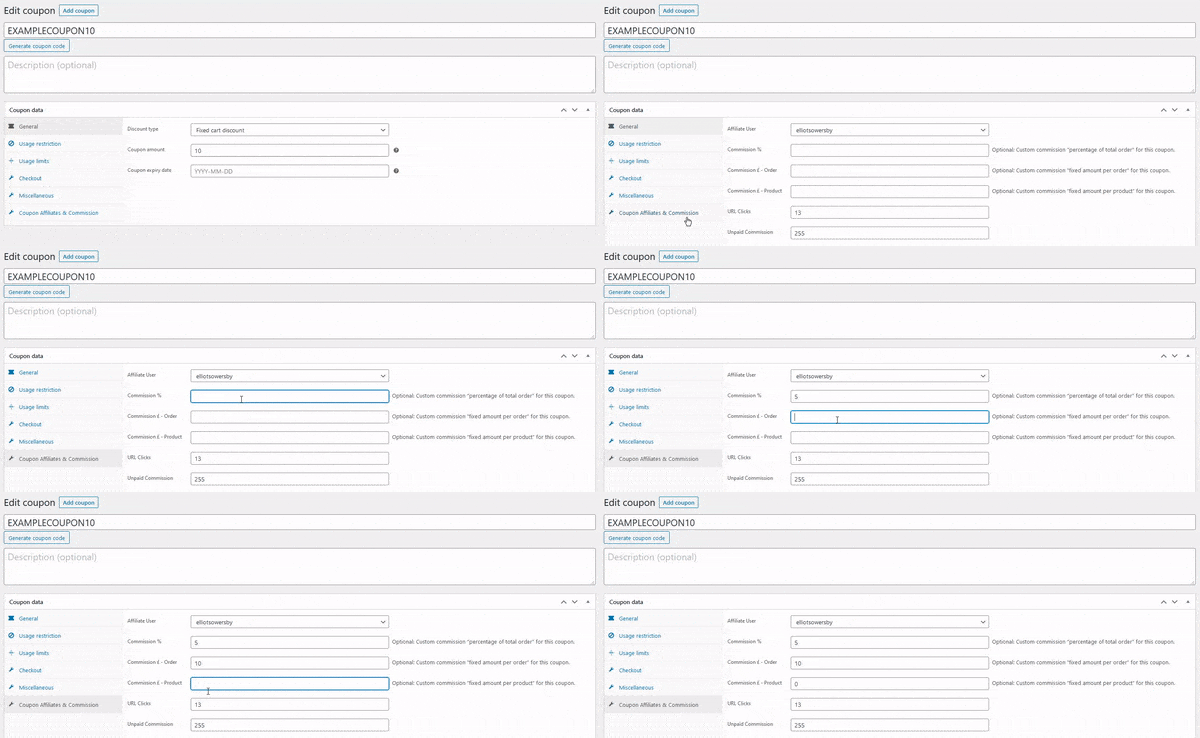
Because each affiliate has their own coupon, setting a rate on the coupon sets it for that affiliate. This is how you give a negotiated rate to an important partner:
- Go to Marketing → Coupons and open the affiliate’s coupon.

- In the “Coupon data” panel, select “Coupon Affiliates & Commission”.
- Enter the custom rates in the “Custom Commission” section and save. These override your storewide default for that affiliate only.
3. Set custom rates per product
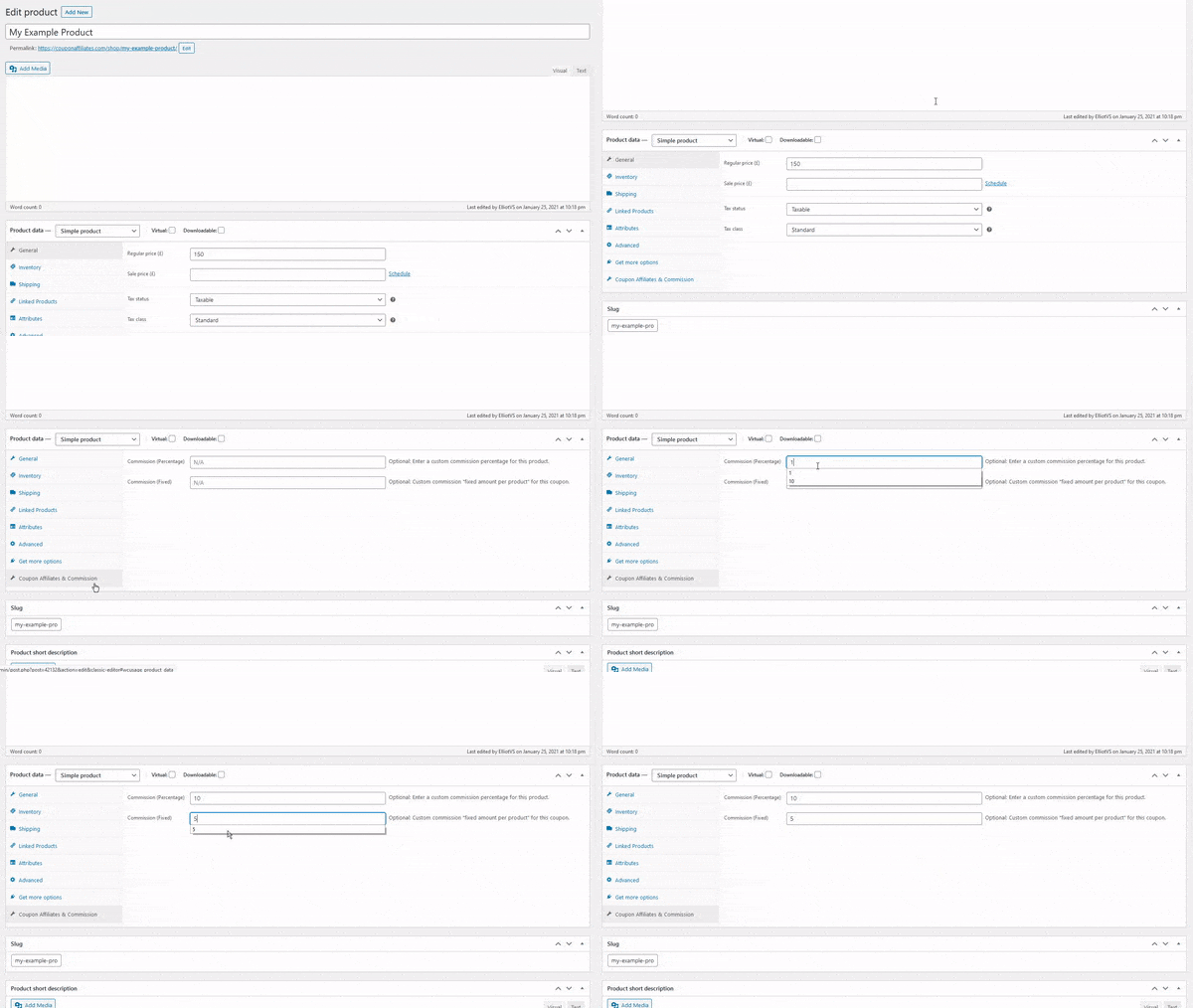
Useful when margins vary across your catalog, or when you want affiliates promoting a particular line:
- Go to Products → All Products and edit the product.

- In the “Product data” panel, select “Coupon Affiliates & Commission”.
- Enter the custom rate for that product and save. Variable products support separate rates per variation, and you can also set per-affiliate rates on individual products if you need that much control.
4. Set custom rates per product category
Rather than editing dozens of products one by one, you can apply a rate to a whole category. Go to Products → Categories, edit the category, and enter the rates under the “Coupon Affiliates” section. This is the quickest way to reflect margin differences between, say, accessories and main products.
5. Set custom rates per user role
- Go to Coupon Affiliates → Settings → Commission.
- Enable the “Per User Role Commission” option.

- Enter rates for each role. This works with custom roles created by other plugins, so it pairs naturally with a tier system such as “Affiliate” and “VIP Affiliate” roles.

6. Set custom rates per affiliate group
With the PRO version you can create affiliate groups, assign affiliates to them, and give each group its own commission rates alongside other options such as payout methods. Groups are the tidiest way to run a tiered program, since promoting an affiliate to a higher tier is just a matter of moving them into a different group.
Two practical details before you start changing numbers. First, you can choose whether coupon-level or product-level rates take priority when both apply, so decide that once in the settings and your overrides will behave predictably. Second, there is an option to stop recalculating commission on past orders when rates change, which means you can adjust rates for future sales without rewriting what affiliates already earned. Full details are in the commission settings documentation.
Frequently asked questions
What is a good affiliate commission rate for a WooCommerce store?
For most WooCommerce stores selling physical products, 10% to 15% on new customer orders is competitive. Digital products can support 20% or more. The honest answer depends on your profit margin: your rate should be a share of profit you are comfortable trading for a sale you would not otherwise have made.
Should commission be paid on shipping and taxes?
Generally no. Shipping and tax are pass-through costs, not revenue you keep, so paying commission on them means paying out money you never earned. Coupon Affiliates excludes them from calculations by default, though you can change this if your situation calls for it.
Can different affiliates earn different rates?
Yes. You can set custom rates on individual affiliate coupons, on user roles, or on affiliate groups, all of which override the storewide default. Most programs use this to pay proven performers more than new joiners.
Do rate changes affect commission already earned?
They can, unless you prevent it. Coupon Affiliates includes a setting that locks in the saved commission value for past orders, so a rate change only applies to orders placed after the change. Turn this on before adjusting rates if you want historical earnings left untouched.
What about recurring commission for subscriptions?
If you sell subscriptions, recurring commission (a share of each renewal) is standard practice and usually sits between 15% and 30%. Coupon Affiliates integrates with WooCommerce Subscriptions for this, and you can cap how many renewals earn commission, for example rewarding only the first three months.
Set your rates, then revisit them
Start from your margins, pick a rate below your ceiling, and write down the reasoning so you can revisit it in six months with real data. A commission rate is not a one-time decision. As your order values, product mix, and affiliate roster change, the right rate changes with them.
When you are ready to put numbers into practice, Coupon Affiliates handles every structure described here, from a single storewide percentage to per-product rates for individual affiliates. Try the free affiliate plugin for WooCommerce or start a 7-day free trial of PRO, which also includes payouts, performance bonuses, and affiliate groups.

Priyanka is a writer for WordPress and eCommerce companies. She loves breaking down complex ideas into simple concepts.

Leave a Reply