

The short answer: WooCommerce doesn’t include affiliate features, so to run affiliate marketing on your store you add an affiliate plugin (or join an affiliate network). Affiliates then promote your products with their own referral link or coupon code, and you pay them a commission only when that brings in a sale.
This guide explains how that works, what it costs, and what you’ll need to decide before you start. When you get to a specific job, it points you to a more detailed guide:
- Choosing software: the best WooCommerce affiliate plugins, compared
- Setting it up: how to create a WooCommerce affiliate program, step by step
- Deciding what to pay: how to set your affiliate commission rate
Disclosure: we make Coupon Affiliates, a WooCommerce affiliate plugin, so we’re not neutral on the software question. This guide mentions it where it’s relevant, but most of it applies whatever you use.
In this guide
- How affiliate marketing works in a WooCommerce store
- Run your own program or join a network?
- Referral links, coupon codes, or both
- What it costs
- Choosing a WooCommerce affiliate plugin
- Getting started: an overview
- Running the program once it’s live
- Is it right for your store?
- FAQ
How affiliate marketing works in a WooCommerce store
An affiliate is anyone who recommends your products in return for a share of the sales they bring in. That could be a blogger, a YouTuber, a podcast host, a coupon site or one of your own customers.
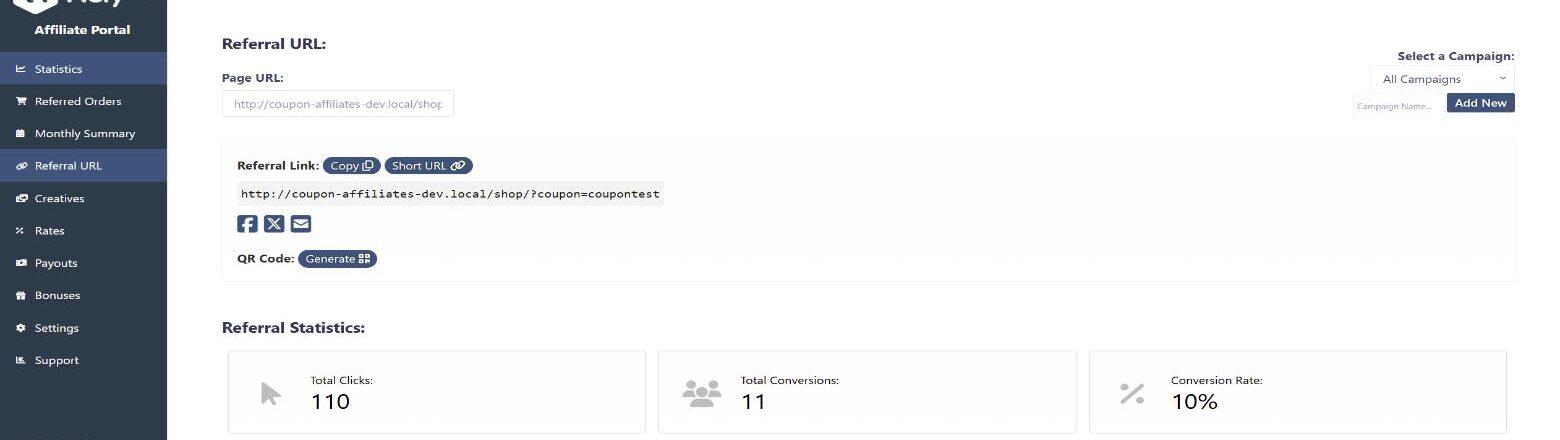
Each affiliate gets something unique to them, usually a referral link, a coupon code, or both. When a customer uses it and places an order, the sale is credited to that affiliate. Once the order is complete (and past your refund window, if you set one), the affiliate earns their commission, and you pay out on a regular schedule, often monthly.
For a store owner, the appeal is that you only pay when an order comes in. Clicks and impressions cost you nothing. For a sense of scale, UK and Irish online retailers on the IRP Commerce platform got 4.51% of their sales through the Awin affiliate network in August 2026. That’s one market and one network, but it shows affiliates can be a meaningful part of a store’s sales.
Run your own program or join a network?
There are two ways to do affiliate marketing with WooCommerce.
Join an affiliate network. Networks like Awin or impact.com connect you with affiliates who are already on their platform, and handle tracking and payments. You get access to a large pool of publishers, but you pay network fees on top of commission, and you’ll usually need an integration or tracking code set up on your store.
Run your own (in-house) program. You install an affiliate plugin on your WooCommerce site, recruit affiliates yourself, and manage everything from your dashboard. There are no network fees, you own the relationships and the data, and you set your own rules. The trade-off is that finding affiliates is your job.
Most small and mid-sized stores start in-house, because the affiliates who sell best are often people who already know the brand, like customers and creators in the same niche. The rest of this guide focuses on that route.
Referral links, coupon codes, or both
How you track sales affects which affiliates your program suits.
Referral links credit the affiliate when a customer clicks their link and later buys. They rely on a cookie stored on the customer’s device, so they work well for bloggers and review sites where readers click through.
Coupon codes credit the affiliate whenever their code is used at checkout, with no click needed. They suit podcasts, videos, Instagram and TikTok, where people hear or see a code and type it in later. The code also gives the customer a reason to buy now.
Many stores use both. Our guide to running a WooCommerce affiliate program without links covers the coupon-only approach in more detail.
What it costs
Running your own program has three main costs:
- Commission. A percentage of each sale (or a fixed amount) paid to the affiliate. What’s sensible depends on your margins; our affiliate commission calculator helps you work it out.
- Customer discounts. If affiliates share coupon codes, the discount comes off your revenue too. The discount break-even calculator shows how much extra you’d need to sell to cover it.
- Software. Several WooCommerce affiliate plugins have free versions, and paid plans vary widely. Coupon Affiliates PRO, for example, is $23.99 a month or $179.99 a year for one site at list price.
Then there’s your time: approving affiliates, answering questions and paying commission. Automating the routine parts helps a lot (see how to automate your affiliate program).
To judge whether it’s paying off, add commission, discounts and software together and compare them with the revenue affiliates bring in. Our guide to affiliate marketing KPIs walks through that calculation.
Choosing a WooCommerce affiliate plugin
WooCommerce has no affiliate features of its own, so the plugin you pick decides what your program can do. The questions that matter most:
- Does it track coupon codes, referral links, or both?
- Is it built for WooCommerce, or for many platforms? A WooCommerce-only plugin works directly with your orders, coupons and refunds, while multi-platform tools usually connect through an integration.
- How does it handle payouts? Look for bulk payouts or payment integrations if you’ll have more than a handful of affiliates.
- What’s in the free version, and what does the paid plan cost as you grow?
We’ve compared ten options against these questions, with pricing and a real downside for each (including ours), in our roundup of the best WooCommerce affiliate plugins. If you’re after a refer-a-friend scheme for customers rather than a partner program, see our WooCommerce referral plugin comparison instead.
For what it’s worth, we built Coupon Affiliates, a WooCommerce affiliate plugin for coupon-led programs. It tracks both coupon codes and referral links, and you can run the basics with the free WooCommerce affiliate plugin on WordPress.org. The main limitation is that it only works with WooCommerce, so it isn’t the right pick if you also sell on another platform.
Getting started: an overview
Setting up a program is mostly a matter of making a few decisions in the right order. In brief:
- Decide who you want as affiliates. Customers, creators and coupon sites need different things from you. Our guide to types of affiliates helps you pick.
- Set your commission and discount. Work backwards from your margin first, then compare with what similar stores pay.
- Write your terms. Cover how commission is earned, when it’s paid, and what affiliates can’t do (like bidding on your brand name). Here’s how to write affiliate terms.
- Install and configure your plugin. This is where you set tracking, the signup form and payouts. The step-by-step setup guide walks through it with screenshots.
- Build a page for your program. A clear affiliate signup page explains what affiliates get and lets them apply.
- Recruit your first affiliates. Start with your customers and email list, then reach out to influencers and creators in your niche. See how to recruit affiliates.
If you’d like a list to tick off, our WooCommerce affiliate program checklist covers each of these in more detail.
Running the program once it’s live
Launching is the easy part. Most programs succeed or stall based on what happens in the first few months.
New affiliates need a push to make their first sale, so a good onboarding process matters more than it sounds. After that, keep in touch with a regular affiliate newsletter and give them banners and images they can post (creatives).
On the admin side, you’ll need to pay affiliates on time and watch for coupon abuse and fraud, especially codes leaking onto deal sites. Check your numbers monthly, and look at your affiliate conversion rate if clicks aren’t turning into orders.
Expect most of your sales to come from a small group of affiliates. That’s normal, and our post on the 80/20 rule in affiliate marketing covers how to make the most of it. If things aren’t moving after a few months, here’s what to check.
Is it right for your store?
Affiliate marketing works for most kinds of WooCommerce store, from physical products to online courses, memberships and digital downloads. It tends to work best when your product is easy to recommend, your margins can cover a commission, and there are people (customers or creators) who already talk about what you sell.
It’s a slower fit if your margins are very thin or if nobody in your niche creates content yet. It also takes steady effort, since affiliates who hear nothing from you tend to drift away. We’ve written up the downsides of affiliate marketing honestly, and a separate look at whether it’s worth it.
Frequently asked questions
Can I use WooCommerce for affiliate marketing?
Yes, but not out of the box. WooCommerce doesn’t include affiliate tracking, so you’ll need an affiliate plugin or an affiliate network integration.
Is there a free WooCommerce affiliate plugin?
Yes. Coupon Affiliates has a free version on WordPress.org, and several other plugins do too. Our plugin comparison notes which ones and what their free versions leave out.
How much commission should I pay affiliates?
It depends on your margins and your product. Start from what you can afford per sale, then check what similar stores offer. Our guide to WooCommerce affiliate commission rates goes through it.
Can I run an affiliate program without referral links?
Yes. With coupon tracking, each affiliate gets their own discount code and is credited whenever it’s used, so no link or cookie is needed.
How long does it take to see results?
Setup can take an afternoon. Sales depend on recruiting affiliates who fit your audience and supporting them, so most stores should judge a program over months rather than weeks.
PS: Ready to start your own program? Coupon Affiliates adds coupon and referral link tracking, affiliate dashboards and payouts to WooCommerce. Start with the free version, or try PRO with a 7-day free trial.

Priyanka is a writer for WordPress and eCommerce companies. She loves breaking down complex ideas into simple concepts.

Leave a Reply